
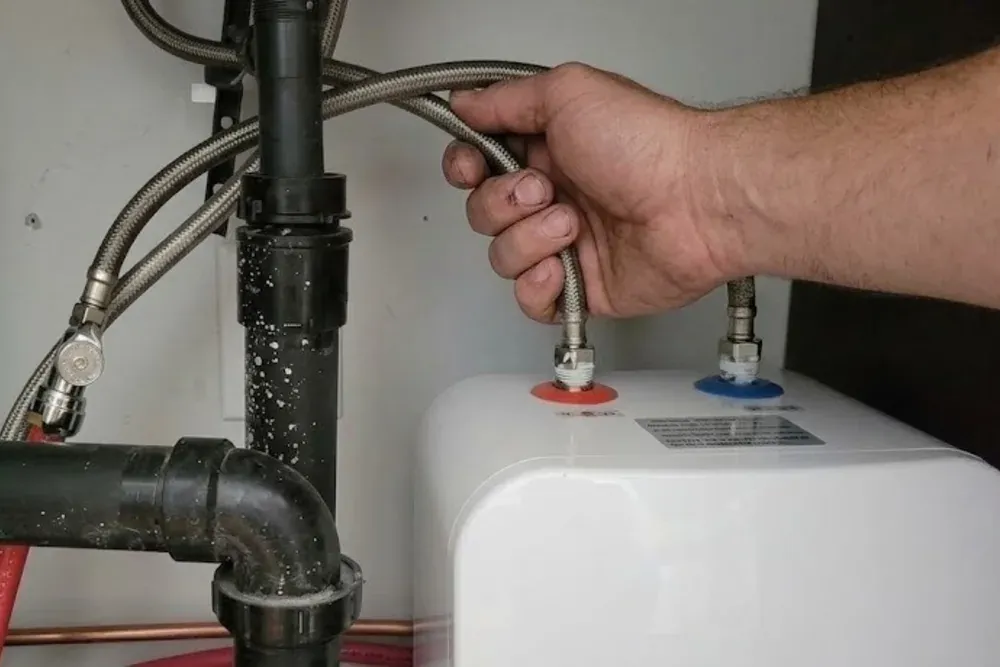
Replacing a gas water heater takes a licensed plumber about half a day when nothing goes wrong. The steps are drain, disconnect, set the new tank, reconnect water and gas, vent, test and inspect. The surprises tend to come from the vent, the gas shutoff, the relief valve drain and a missing expansion tank.
If you are deciding between doing it yourself and hiring a plumber, the short answer is to hire one for gas. A gas leak or a bad vent is a safety issue, and Pleasanton requires a permit for the work.
How to tell it is time to replace
Signs the tank is finished
- Water seeping from the tank body or its seam, not just a fitting.
- Rusty hot water or flakes from the hot tap.
- A heater older than about twelve years that now needs frequent repairs.
- Loud rumbling from sediment baked onto the tank floor.
- A pilot or burner that will not stay lit even after a new part.
A repair costs less when the heater is young and the fault is a small part. Our water heater repair page lists the symptoms that justify a repair, and the table there helps you compare.
Sizing the new tank
| Household | Typical tank size | What to check |
|---|---|---|
| One or two people, one bath | 30 to 40 gallons | First-hour rating on the label. |
| Three or four people, two baths | 40 to 50 gallons | Recovery rate in gallons per hour. |
| Five or more people, three baths | 50 to 75 gallons or two heaters | Peak morning demand. |
| Large soaking tub or multiple showers | Larger tank or tankless | Gas line capacity. |
The first-hour rating on the yellow label is more useful than the gallon count. It tells you how much hot water the heater can deliver in the first sixty minutes of heavy use. A 40-gallon tank with a strong burner can outperform a 50-gallon tank with a weak one.
What the air district rule means for your purchase
Until the new compliance date, a replacement gas heater is bought the way it always has been. After it, the rule is meant to steer replacements toward zero-NOx models, with exemptions for qualifying low-income owners and for properties with significant electrical or space constraints, according to the district.
Ask the installer which models are allowed on the day of installation. Rules can change again, so check baaqmd.gov before you sign.
The swap, step by step
What happens on replacement day
- The gas control is turned off, the water supply is closed and the tank is drained to a floor drain or the yard.
- Gas, water, vent and relief valve connections are disconnected, and the old tank is carried out.
- The new tank is set on its platform or pan, strapped at the top and bottom thirds and checked for level.
- New flex lines, a shutoff, a sediment trap, a relief valve and its discharge pipe are installed, plus an expansion tank where needed.
- Gas joints are leak tested, the burner is lit, the vent draft is checked and the inspector is scheduled.
Venting and combustion air
A gas tank vents through a flue that must rise continuously to the outdoors with the clearance the maker requires. The Pleasanton handout calls for 6 inches of clearance for single-wall vent and 1 inch for B-vent, and a vent cap at least one foot above the roof.
A closet needs combustion air openings near the floor and the ceiling. A new heater in an old closet that was sealed up in a past remodel is a common problem, and we check it before the old tank comes out.
Cost factors to expect
| Factor | Effect |
|---|---|
| Tank size and efficiency | Larger and higher-efficiency tanks cost more. |
| Vent condition | A rusted or undersized flue must be replaced. |
| Code items | Seismic straps, expansion tank, pan and platform add parts and time. |
| Permit and inspection | Fees and scheduling apply. |
| Haul-away and disposal | Usually included in a plumber's quote. |
Maintenance that extends the life of the new tank
Flush the tank once a year to remove sediment that insulates the burner and makes the heater work harder. Test the relief valve by lifting its lever briefly, with a bucket under the discharge pipe, and replace it if it does not reseat. Check the anode rod every two or three years, since it corrodes first so the tank does not.
Set the thermostat to 120 degrees Fahrenheit for a balance of comfort, safety and efficiency. Keep the area around the heater clear of stored items, since a gas heater needs air and clearance to burn safely.
Where we work near Pleasanton
We replace water heaters in Pleasanton and nearby towns, including Livermore and Danville. Our water heater installation page covers planned changes of location or fuel, and tankless service covers the other option.
Questions we hear from callers
The Bay Area air district says the rule applies only when a water heater is replaced and does not require replacing a working unit. If your tank is leaking now, you should not wait. Ask the installer which models are allowed on the day of installation.
The City of Pleasanton's handout requires one when the water system has a check valve, a backflow preventer or another normally closed device. We test and tell you.
Many tanks last ten to fifteen years, depending on water quality and maintenance. An annual flush and an anode rod check help.
Gas connections, venting and combustion air are safety items, and a permit is required in Pleasanton. We recommend a licensed plumber for gas work.
Yes, if the panel has capacity for a 240 volt circuit. A heat pump unit also needs space, airflow and a condensate drain.