
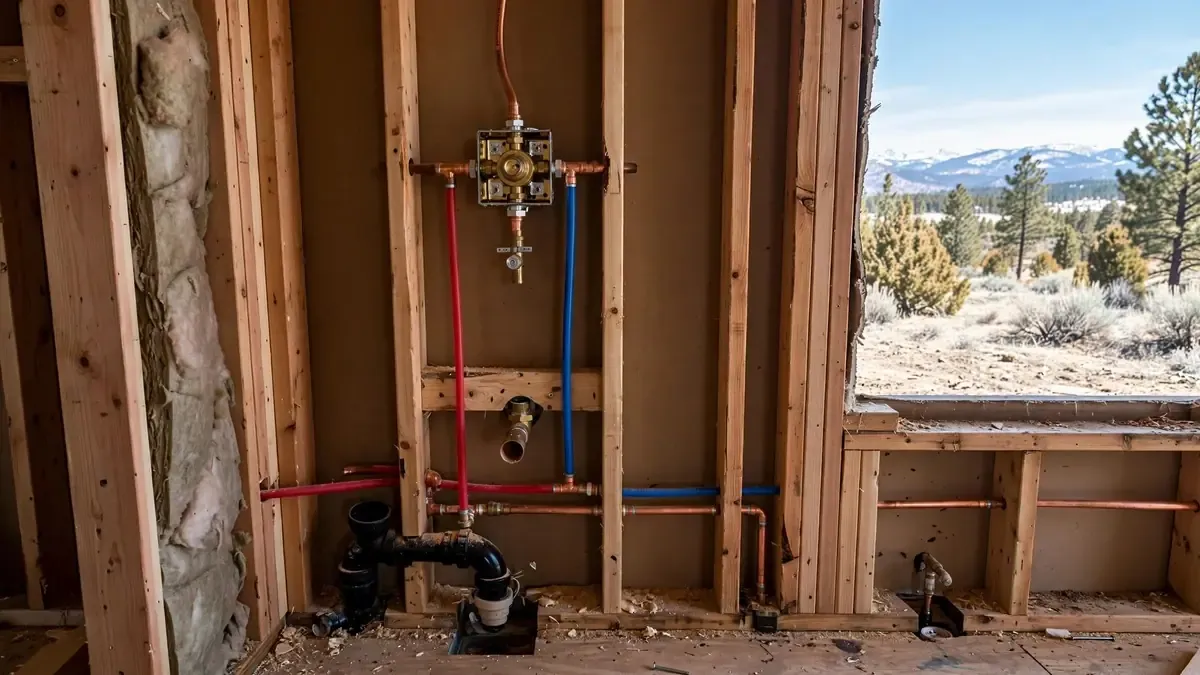
A leaking shower faucet is usually caused by a worn cartridge, a damaged seat or worn O-rings inside the valve. The repair is a matter of closing the water, removing the handle and trim, pulling the old cartridge and installing a matching one. Most homeowners can do it in an afternoon if they identify the valve brand first.
Valves differ more than faucets do, so the first job is to find out what you have. Leaks from the showerhead and leaks from the tub spout have different causes. The trim around the valve hides the answer.
Which kind of valve do you have?
| Type | How it works | Usual repair |
|---|---|---|
| Single handle cartridge | One handle controls flow and temperature | Replace the cartridge. |
| Two handle compression | Separate hot and cold handles with washers | Replace the washers and seats. |
| Pressure balancing | A balancing spool keeps temperature steady | Replace the cartridge or balance unit. |
| Thermostatic | Holds a set temperature by sensing the mix | Replace the thermostatic cartridge. |
| Diverter on tub and shower | Switches flow between spout and showerhead | Replace the diverter. |
Take the handle off and look at the cartridge to find the brand name. If you cannot identify it, take the old cartridge to a plumbing supply store, since a near match often does not seal.
Replacing a leaking cartridge
- Shut off the water to the bathroom or the whole house, then open the shower to drain the line.
- Remove the handle with a small screwdriver or hex key, then take off the trim plate to expose the valve.
- Remove the retaining clip or screw that holds the cartridge, then pull it straight out with pliers. A stuck cartridge needs a puller made for that brand.
- Wipe the valve body clean, coat the new O-rings with plumber's grease and insert the new cartridge in the same orientation.
- Reassemble, open the water slowly and check for drips at the handle, the spout and the showerhead.
Drips at the showerhead versus the tub spout
A showerhead that drips when the shower is off often has a worn cartridge, and it can also be a worn diverter if water comes from the spout. A drip only after the shower has been used for a while may just be water left in the pipe, which drains over a minute or two. A steady drip means a leak.
A leaking spout with the diverter up usually points to the diverter or the cartridge. A leak around the handle points to a loose or damaged O-ring. If the water is brown or smells of rust, the pipes may be corroding, and repiping is worth a look.
When the valve body or the wall is the problem
If you replace the cartridge and it still leaks, the valve body may be cracked, or the seats may be worn beyond repair. In that case, the valve has to be replaced, which means opening the wall from the back or removing tile. Older valves can also be soldered to copper in a way that makes removal difficult.
If the ceiling below the shower is stained, if the wall is soft or if the tub caulking has failed, stop using the shower and call. Water behind tile can run for months before it shows up on a surface.
When to call a plumber
Good reasons to hand this one off
- You cannot identify the valve brand or find a matching cartridge.
- The handle will not come off or the cartridge is stuck.
- The shower will not turn off at all.
- You see water stains on the ceiling or the wall next to the shower.
- The valve is behind tile and you do not want to risk the finish.
A plumber has cartridge pullers, brand-specific kits and the experience to tell a valve problem from a pipe problem. Our faucet repair team handles shower valves, hose bibs and kitchen fixtures. If you suspect a hidden leak behind the wall, leak detection can locate it.
Preventing the next leak
Most shower valves fail slowly. Scale builds up on the cartridge, the O-rings dry out and the seat wears. Cleaning the showerhead and the aerator once or twice a year reduces back pressure on the valve, and turning the handle through its full range now and then keeps the cartridge from sticking.
Check the caulk where the tub meets the tile and the seal around the trim plate every year. A gap lets water behind the wall, and the first sign is often a soft spot in the drywall on the other side. Fix gaps early, because water inside a wall does the most damage when no one is looking.
If the water takes a long time to warm up or the temperature swings, the pressure balancing unit may be worn. That is a separate repair from a drip, and it is worth doing before the next cold morning.
Where we work near Pleasanton
We serve Pleasanton and the surrounding towns, including Livermore and Dublin. If a valve is stuck open and the water will not stop, close the main and call the 24/7 line.
Questions we hear from callers
The City of Pleasanton's bathroom handout says a new or replaced shower mixing valve must be pressure balancing and set to a maximum of 120 degrees Fahrenheit. The water heater thermostat cannot be used to meet that rule.
Many last ten years or more. Hard water and heavy use can shorten that, and scale is a common cause of sticking.
A small drip for a minute is residual water. A steady drip means a worn cartridge, seat or O-ring.
Often, yes. The cartridge is behind the trim plate. If the valve body itself leaks, the wall must be opened.
A cartridge swap costs far less than a valve body replacement. We quote the price before work begins.