
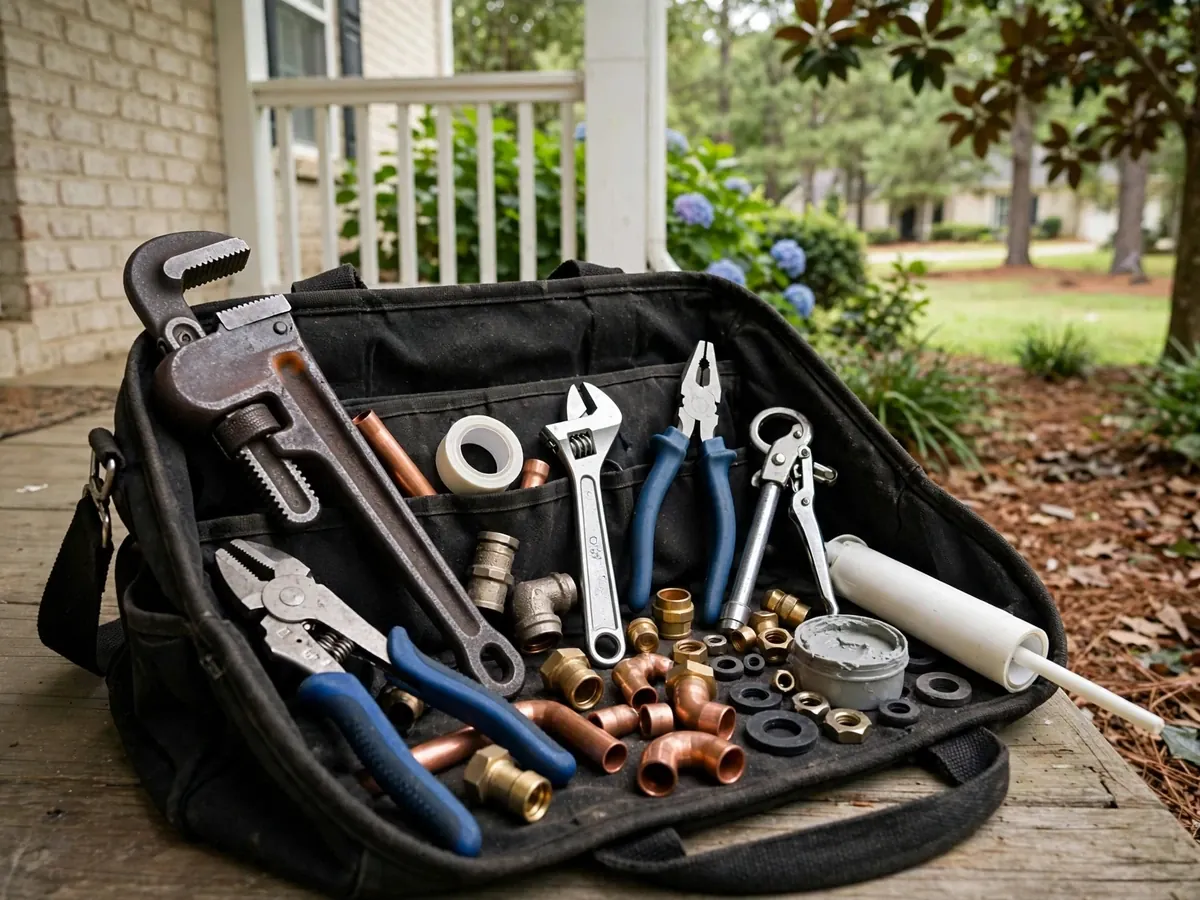
Good do-it-yourself plumbing jobs share three traits. They are easy to reverse, they have a shutoff valve right next to them and a mistake produces a drip, not a flood. Replacing a flapper, a showerhead or a faucet washer fits that description. Replacing a water heater or moving a drain does not.
This guide groups jobs into three tiers and then explains what Pleasanton says about permits, which matter more than most homeowners expect.
Tier one: safe for most homeowners
Low risk, good for a first project
- Replace a toilet flapper, fill valve or handle.
- Clear a sink or toilet clog with a plunger or hand auger.
- Swap a showerhead or faucet aerator.
- Replace a faucet washer or cartridge when there is a shutoff nearby.
- Replace a hose washer or tighten a packing nut on a hose bib.
- Clean a P-trap under a sink.
For any of these, close the local shutoff first, open the faucet to drain the line and keep a bucket handy. Take photos before you disassemble anything, so you can put it back in the right order. Our faucet repair and toilet repair pages show what each repair involves.
Tier two: possible, with the right tools and care
| Job | Why it is harder | Common mistake |
|---|---|---|
| Install a new faucet | Tight space and old shutoff valves | Overtightening and cracking a fitting. |
| Replace a garbage disposal | Electrical and drain connections | Forgetting the dishwasher knockout plug. |
| Replace a toilet | Heavy and needs a good seal | Reusing a wax ring or cracking the bowl. |
| Replace a shower cartridge | Brand-specific parts | Buying a near match that leaks. |
| Replace a supply line or shutoff valve | Main valve must be closed | A stuck main that will not close. |
Before you start any of these, find the main shutoff and confirm that it closes. A stuck main turns a minor job into an emergency. If the shutoff leaks or will not turn, have it replaced before anything else.
Tier three: leave it to a plumber
High risk, high consequence
- Gas lines, gas shutoffs and gas appliance connections.
- Water heater replacement, including venting and relief valve discharge.
- Sewer line repair, main drain work and anything under the slab.
- Moving or adding drains, vents and supply lines in a wall.
- Repiping, water service lines and backflow devices.
- Any repair where you cannot close a shutoff or find the source.
These jobs depend on code knowledge, tools and inspection. A mistake can leak gas, flood a structure or fail an inspection when you sell. Our plumbing installation page covers what a licensed plumber does and why permits apply.
Why a permit is not just paperwork
A permit brings an inspector who checks the work before it is closed up. That inspection is a record that you can show a buyer, an appraiser or an insurer. Work done without a permit can cause trouble at sale, and an insurer may question a claim that traces back to unpermitted work.
Homeowners can pull their own permit in Pleasanton, according to the city's handout, but they are then responsible for the work and for passing the inspection. A licensed plumber pulls the permit and answers to the inspector.
Tools and habits that prevent damage
A short kit and a few rules
- A basin wrench, adjustable wrenches, pliers and a hand auger.
- Plumber's tape, plumber's grease and a pipe cutter.
- A bucket, towels and a wet vacuum.
- Turn off the main when in doubt, and test it before you begin.
- Never mix drain cleaners, and never use them in a toilet.
When a DIY job goes wrong
If a fitting will not stop leaking, close the shutoff and stop. Continued tightening usually cracks a fitting and makes the repair larger. If you cannot close the water, shut the main and call.
Our plumbers fix many half-finished jobs, and we never lecture. We tell you what the pipe needs and what the repair costs. For leaks you cannot see, see leak detection.
Time, cost and the value of getting it right
The savings from a do-it-yourself repair are real for simple jobs. A flapper or a faucet washer costs a few dollars, and a plumber's visit costs more than the part many times over. For those jobs, doing it yourself makes sense, and the learning is useful.
The math changes with bigger jobs. A tool you use once, a second trip to the store and a leak that damages a cabinet can cost more than the plumber would have charged. The hidden cost is time, since a job that takes a plumber an hour can take a first-timer an afternoon.
A fair rule is to do what you can undo, and to call for what you cannot. If you are on the fence, a phone call to a plumber costs nothing and may save you the afternoon.
Where we work near Pleasanton
We serve Pleasanton and nearby towns, including Dublin and Danville. If a DIY repair becomes an emergency, call the 24/7 line.
Questions we hear from callers
Yes. The City of Pleasanton's water heater handout says plumbing permits may be issued to a state-licensed contractor, the homeowner or the homeowner's authorized agent. The homeowner is then responsible for the work and the inspection.
The city's permit handout exempts stopping leaks in pipes, but replacing a concealed pipe counts as new work and needs one.
A plumbing permit is required to replace a water heater in Pleasanton, and gas work carries safety risk. We recommend a licensed plumber.
A stuck or missing shutoff during a repair, and any gas connection done without a leak test. Both turn small jobs into emergencies.
When you cannot close a shutoff, when a fitting leaks after tightening or when the job involves gas, the sewer or the slab.