
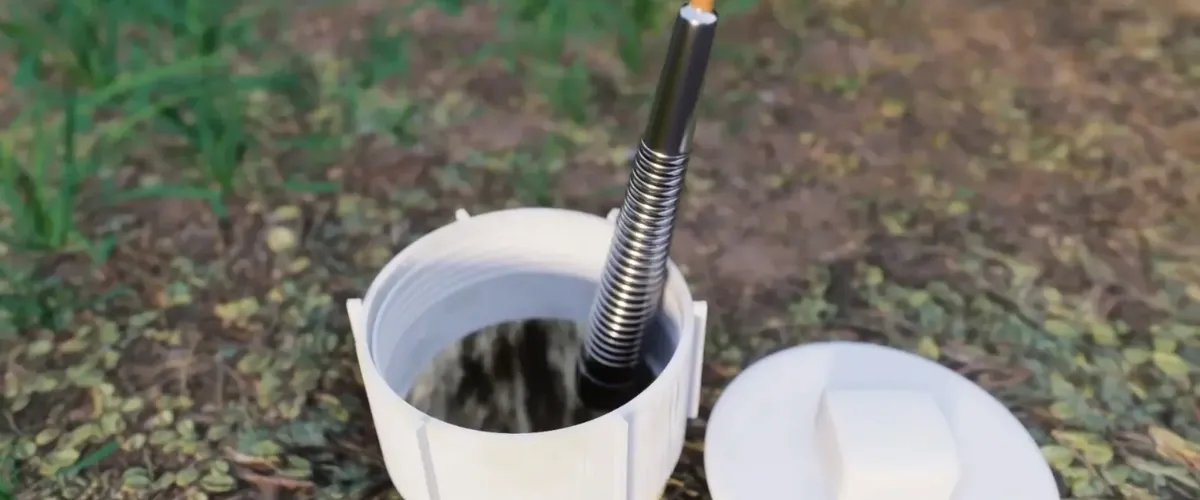
A plumbing vent is a pipe that runs from your drain system up through the roof. It lets air in behind water as it drains, so water flows smoothly, and it lets sewer gas escape above the house. When a vent clogs, water leaves a drain slowly, the pipes gurgle and sometimes a sewer smell appears.
Clearing a vent usually means a short trip to the roof with a garden hose or a plumber's snake. The work is simple, and the danger is falling, so please read the safety section before you climb.
Signs a vent may be blocked
| Symptom | Likely cause | Test |
|---|---|---|
| Gurgling after a toilet flush or a sink drains | Air cannot enter the pipe behind the water | Run one fixture and listen at the others. |
| Slow drains in several fixtures but no standing water | Partial vent blockage | Open a roof vent cap and run water. |
| Sewer smell in a bathroom or the yard | Failed vent or dry trap | Check traps and the vent cap. |
| Toilet bowl water bobs up and down | Negative pressure from a blocked vent | Watch the bowl after a drain runs. |
| Backups in the lowest drain | Main line blockage, not a vent | Try the cleanout or call a plumber. |
The last row matters. A vent problem and a main line problem can look alike, and clearing a vent will not fix a stoppage in the sewer line. If the lowest drain in the house backs up, the main is more likely the cause.
What blocks a vent
Leaves, nests and debris land in the open pipe on the roof. In Pleasanton's dry, wooded neighborhoods, such as streets near the ridge, tree litter is an ordinary cause. Birds and rodents also build nests in vent pipes, and a vent cap that is too fine can clog with debris.
Less often, a vent clogs from inside. A vent that shares a pipe with a kitchen drain can collect grease, and a poorly pitched vent in a wall can hold condensation that freezes in cold climates. Here, the issue is more likely debris than ice.
Roof safety comes first
Before you climb
- Never go on a wet, damp or dewy roof, or in wind.
- Use a stable ladder that extends at least three feet above the roof edge, and have someone hold it.
- Wear shoes with grip, and use a safety harness if the pitch is steep.
- Avoid tile and shake roofs unless you know how to walk them, since they crack and slide.
- If you are unsure, skip it and call a plumber.
Every year people fall from roofs while doing small chores. A plumber is a reasonable cost against an injury.
Clearing the vent from above
- Find the vent pipe, a round pipe sticking up through the roof, often near the bathrooms or kitchen.
- Look inside with a flashlight and pull out visible debris with a gloved hand or a grabber.
- Run a garden hose down the pipe and listen for gurgling that tells you the water is draining.
- If the water backs up, feed a plumber's snake or a flexible auger down and work it gently to break the blockage.
- Flush a toilet and run a sink in the house to see whether the gurgling stops.
Other ways a vent fails
If the vent is clear and the gurgling continues, the problem may be inside the wall. A vent pipe can be crushed during a remodel, disconnected at a joint or sagging so it holds water. These need a camera and an access hole, and they are plumber jobs.
A dry trap is another cause of smell. A trap under a rarely used sink or floor drain dries out, and sewer gas comes up. Run water in it for a minute, and pour a little water or mineral oil in to keep the seal.
When to call a plumber
Call if you cannot reach the vent safely, if the blockage does not clear, if the main line is backing up or if you hear gurgling in several fixtures that a vent cleaning did not fix. A plumber can use a camera and a cable machine from the cleanout or the roof.
Our drain cleaning team also handles sewer line cleaning and can look inside the line with a camera. We tell you whether the vent, the branch line or the main is the problem before we quote.
A note on air admittance valves
Some fixtures, especially under a kitchen island or in a remodeled bathroom, use an air admittance valve instead of a pipe to the roof. The valve opens to let air in as water drains and closes to keep sewer gas out. When it sticks, the fixture gurgles and drains slowly.
These valves wear out and are usually replaced rather than cleaned. A plumber can swap one in minutes, and it is a good first thing to check when a single island sink or a distant bathroom has trouble that the roof vents do not explain.
Where we work near Pleasanton
We serve Pleasanton and nearby towns, including Livermore and Dublin. If sewage is backing up into a tub or floor drain, stop using water and call the 24/7 line.
Questions we hear from callers
Not usually. The City of Pleasanton's plan says laterals belong to the property owner, and most gurgling comes from a blocked vent or a lateral. If neighbors are also affected, the city main may be at fault, and the city lists a weekday customer service line and after-hours dispatch.
Looking at them once a year, in dry weather, is plenty. Check after a storm or if you hear new gurgling.
Yes. Without air behind the water, a toilet drains slowly and may gurgle.
Most do, and some fixtures use air admittance valves instead. A plumber can tell which you have.
No. A dry trap, a cracked lateral or a failed seal can cause it too. We trace the smell to its source.